
Workplace Safety and Liability for Temporary Staff
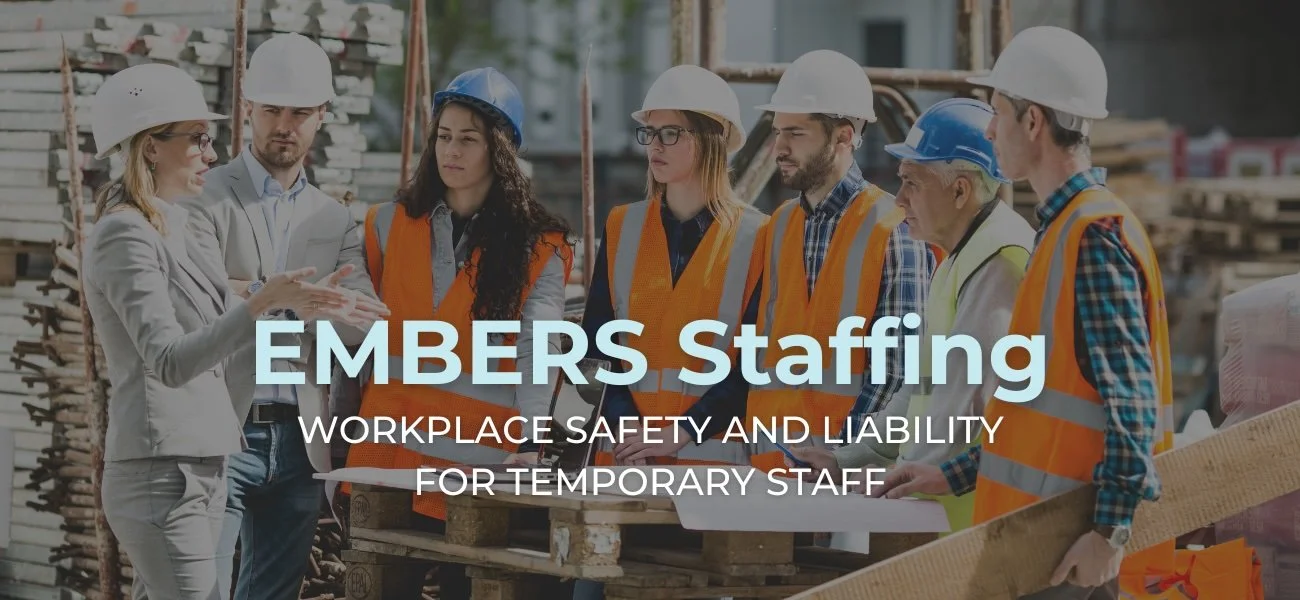
Temporary staff play a vital role in keeping projects moving, filling workforce gaps, and supporting business growth across industries. At EMBERS Staffing, safety is more than a requirement: it’s a shared responsibility. Understanding how workplace safety and liability work for temporary employees helps create safer job sites, clearer expectations, and stronger partnerships between workers, host employers, and staffing agencies.
Who Is Responsible for Safety?
When a worker is placed through a staffing agency like EMBERS, safety responsibilities are shared.
The host employer is responsible for:
Providing a safe and hazard-free work environment
Supplying site-specific safety training and orientation
Ensuring proper supervision and safe work practices
Providing required personal protective equipment (PPE), unless otherwise agreed
EMBERS Staffing is responsible for:
Conducting pre-placement screening and skills matching
Ensuring workers have required certifications (e.g., WHMIS, PPE awareness)
Educating workers on their rights and responsibilities
Maintaining Workers’ Compensation coverage
Supporting workers if safety concerns arise
Temporary workers are responsible for:
Following all safety rules and procedures
Using PPE correctly
Reporting hazards, incidents, or near-misses immediately
Refusing unsafe work when necessary
Clear communication between all parties is essential to prevent injuries and misunderstandings.
Liability and Workers’ Compensation
In most cases, temporary workers are covered by the staffing agency’s Workers’ Compensation plan. This means:
If a worker is injured on the job, claims are typically handled through the agency
Medical costs and wage replacement are managed according to provincial regulations
However, liability does not end there. Host employers may still be accountable if:
Safety training was inadequate
Equipment was faulty or unsafe
Workers were asked to perform tasks outside their job description or training
Proactive safety planning protects everyone involved.
Training Matters, Before Day One
One of the most common causes of workplace injuries among temporary staff is insufficient site-specific training. Even experienced workers need:
A clear orientation to the job site
An explanation of unique hazards
Emergency procedures and reporting protocols
A short safety briefing at the start of a shift can significantly reduce risk.
The Right to Refuse Unsafe Work
Temporary workers have the same rights as permanent employees when it comes to safety. This includes the right to:
Ask questions about tasks or hazards
Report unsafe conditions without fear of retaliation
Refuse work that poses an immediate danger
At EMBERS, we encourage workers to speak up and contact our team if they feel unsafe at any point.
How EMBERS Supports Safer Workplaces
As a community-based staffing agency, EMBERS takes a proactive approach to safety by:
Partnering closely with host employers
Matching workers to roles that fit their skills and experience
Providing ongoing check-ins and support
Advocating for workers when safety concerns arise
Our goal is simple: everyone gets home safe at the end of the day.
Final Thoughts
Temporary staffing offers flexibility and opportunity, but safety should never be flexible. When host employers, staffing agencies, and workers understand their roles and responsibilities, job sites become safer, more productive, and more inclusive.
If you’re an employer looking for reliable, safety-conscious staffing solutions - or a worker seeking respectful, well-supported job placements - EMBERS Staffing is here to help.
Safety is a shared responsibility. Let’s build safer workplaces together.